
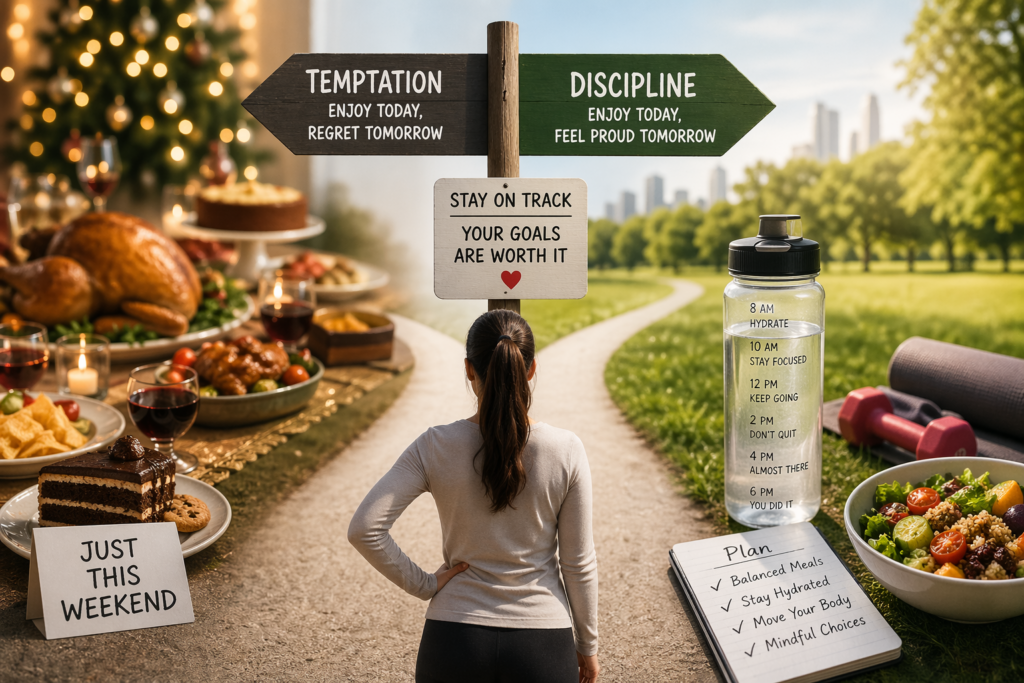
“In this article, you’ll learn how to stay on track with your diet during weekends and holidays.”
You eat perfectly all week — then Friday night arrives, and everything falls apart. It is a common frustration that many people face when the structured work week ends. You start with great intentions, but social gatherings and relaxed schedules often lead to unplanned indulgence.
Maintaining healthy eating habits should not feel like a punishment. We understand that balancing a healthy lifestyle with fun events is difficult. You deserve to enjoy your time without feeling like you are ruining your long-term progress.

This guide provides realistic, actionable steps for your busy schedule. You will learn how to stay on track with diet goals while still savoring your favorite holiday treats. Let us explore simple ways to keep your wellness journey moving forward, even when life gets busy.
Key Takeaways
- Recognize that one meal does not define your overall progress.
- Plan ahead for social events to avoid impulsive food choices.
- Focus on adding nutritious foods rather than just restricting calories.
- Practice mindful eating to better enjoy your favorite holiday treats.
- Prioritize consistency over perfection to maintain long-term results.
The Weekend and Holiday Struggle
The transition from a structured work week to the freedom of the weekend often triggers a breakdown in healthy eating. Many people find that their carefully planned weekend diet tips fall apart as soon as the clock strikes Friday evening. This shift is not just about a lack of willpower; it is a complex reaction to changing environments.
Why Routine Changes Disrupt Progress
Our bodies thrive on consistency, and our internal cues are often tied to specific daily schedules. When we abandon our weekday routines, we lose the external triggers that remind us to eat balanced meals. This disruption often leads to the all-or-nothing mindset, where one small deviation makes us feel like we have already failed.
Once this feeling of failure sets in, many people abandon their goals entirely until Monday. This cycle is a major barrier to overcoming diet failure. By recognizing that a single meal does not define your progress, you can maintain better control over your long-term health.
The Psychology of Abundance and Social Pressure
Holidays and weekends often present an environment of extreme abundance. When we are surrounded by endless food options, our brains struggle to regulate portion sizes effectively. This is a core component of holiday nutrition, where the sheer variety of dishes can override our natural satiety signals.
Furthermore, social eating plays a significant role in how we consume calories. We often feel a subconscious pressure to participate in the festivities, which can lead to overindulgence. Alcohol further complicates this by lowering our inhibitions and making it harder to stick to our nutritional goals.
Understanding these psychological triggers is essential for overcoming diet failure. When you acknowledge that your environment influences your choices, you can create a plan that accounts for these social pressures. Staying mindful during these times is the key to enjoying your life while maintaining your health.
How to Stay on Track with Your Diet Using Flexible Strategies
Flexible nutrition strategies are the secret to staying on track without feeling deprived. You do not need to choose between enjoying your life and reaching your health goals. By making small, intentional adjustments, you can maintain a balanced diet throughout the busiest times of the year.

Prioritize Protein and Fiber Early in the Day
Starting your morning with a high-protein and high-fiber meal sets a positive tone for the rest of the day. These weekend diet tips help stabilize your blood sugar levels, which prevents the mid-afternoon energy crash. When you feel full and satisfied, you are less likely to reach for sugary snacks later on. *”For more science-backed nutrition advice, check out our guide on [10 Foods That Boost Metabolism].“*
Practice Mindful Portion Control Without Restriction
Mindful eating is about listening to your body rather than following strict rules. Instead of banning your favorite treats, try serving yourself a smaller portion on a smaller plate. This simple shift allows you to savor every bite while naturally keeping your intake in check.
Stay Hydrated to Distinguish Thirst from Hunger
Many people mistake mild dehydration for hunger signals. Prioritizing hydration for weight loss ensures that your body functions optimally and helps you avoid overeating during social events. Keep a water bottle nearby to stay refreshed throughout the day.
Plan Your Indulgences in Advance
Deciding which treats you truly want to enjoy helps you stay in control. When you plan your holiday food choices, you remove the stress of impulsive decisions. This proactive approach makes it easier to maintain a balanced diet while still participating in the festivities.
Keep Moving with Low-Intensity Activity
You do not need a grueling gym session to stay active. Incorporating nutrition strategies alongside light movement, such as a brisk walk after a meal, aids digestion and boosts your mood. These simple habits keep your metabolism steady without adding extra stress to your weekend.
Focus on Nutrient-Dense Additions Rather Than Subtractions
Instead of focusing on what you should remove from your plate, think about what you can add. Adding a side of roasted vegetables or a fresh salad to your meal increases your nutrient intake. This positive mindset makes healthy eating feel like an upgrade rather than a sacrifice.
Prepare Healthy Options for Potlucks and Gatherings
Bringing a nutritious dish to a gathering ensures you always have a healthy option available. Whether it is a colorful fruit platter or a hearty quinoa salad, your contribution will likely be appreciated by others. Here are a few quick ideas for your next event:
- Roasted vegetable skewers with a balsamic glaze.
- Greek yogurt-based dips served with fresh crudités.
- Quinoa or lentil salads packed with fresh herbs.
- Fruit-infused sparkling water for a festive, low-calorie drink.
Navigating Social Pressure and Alcohol
Navigating holiday parties requires a blend of social grace and personal commitment. When you focus on social eating, it is easy to feel overwhelmed by the abundance of treats. However, prioritizing your holiday nutrition goals does not mean you have to skip the fun.
Handling Well-Meaning Food Pushers
Friends and family often express love through food, which can make it difficult to avoid overeating. When someone insists you try a specific dish, remember that a simple “no thank you” is perfectly acceptable. You do not need to provide a long explanation for your choices.
Try shifting the focus by offering a genuine compliment about the meal. You might say, “That looks delicious, but I am quite full right now.” This approach acknowledges their effort while keeping you in control of your plate.
Smart Choices for Holiday Beverages
Liquid calories often go unnoticed during festive gatherings. Making better holiday food choices starts with what you drink. Prioritizing hydration for weight loss is a smart move, as it helps you feel full and prevents mindless snacking.
Consider alternating between an alcoholic beverage and a glass of sparkling water with lime. This simple habit keeps you hydrated and slows down your overall intake. Below is a comparison of common drink options to help you make informed decisions.
| Beverage Type | Calorie Estimate | Health Impact |
|---|---|---|
| Eggnog (8 oz) | 350+ | High sugar and fat |
| Red Wine (5 oz) | 125 | Moderate choice |
| Sparkling Water | 0 | Best for hydration |
| Holiday Punch | 200+ | High sugar content |
Setting Boundaries Without Being Rude
Effective nutrition strategies rely on your ability to communicate clearly. You can set firm boundaries without causing social friction by being proactive. If you know a gathering will be food-heavy, eat a small, balanced snack before you arrive.
If someone continues to push food, stay calm and keep your response brief. You are the ultimate authority on your body and your health. By staying consistent, you show others that your commitment to wellness is a positive lifestyle choice rather than a temporary restriction.
Managing the All-or-Nothing Mindset
The path to a healthy lifestyle is rarely a straight line, and that is perfectly okay. Many people fall into the trap of believing that one unplanned meal ruins their entire progress. This rigid way of thinking often leads to unnecessary guilt and frustration.

Why One Meal Does Not Define Your Success
It is important to remember that your body does not track your nutrition based on a single sitting. One indulgent meal does not erase the hard work you have put in over the previous days or weeks. True progress is measured by the sum of your choices over time, not by a single moment of celebration.
When you view food as fuel rather than a moral test, you can stop the cycle of shame. By practicing mindful eating, you learn to enjoy your food without the heavy burden of judgment. This shift in perspective is essential for long-term success.
The Importance of the Next-Meal Mentality
The “next-meal mentality” is a powerful tool for overcoming diet failure. Instead of spiraling after a heavy meal, simply treat the very next time you eat as a fresh start. You do not need to starve yourself or over-exercise to “make up” for what you ate.
Simply return to your normal, balanced routine as soon as possible. This approach prevents a single slip from turning into a weekend-long binge. It keeps you grounded and focused on your goals.
Reframing Perfectionism as Consistency
Perfectionism is often the enemy of progress. When you demand flawless adherence to a plan, you are more likely to quit when things do not go as expected. Instead, focus on portion control and steady, sustainable habits that fit your life.
Consistency is about showing up for yourself, even when you are not perfect. By allowing for flexibility, you build a relationship with food that lasts a lifetime. Use the table below to see how these two mindsets differ in practice.
| Feature | All-or-Nothing Mindset | Consistent Mindset |
|---|---|---|
| Reaction to a slip | Gives up entirely | Resumes normal habits |
| View of food | Good vs. Bad | Fuel and enjoyment |
| Long-term goal | Short-term perfection | Sustainable health |
| Emotional state | High stress/Guilt | Calm/Balanced |
Conclusion
True progress relies on the choices you make over months and years rather than a single weekend. Building healthy eating habits requires a shift in perspective where you view food as fuel and joy rather than a source of stress.
A balanced diet remains sustainable when you embrace flexibility. You do not need to be perfect to see results. Small, intentional actions lead to lasting change.
Prioritize your mental well-being by practicing self-compassion during busy holidays. Maintaining diet consistency becomes much easier when you stop viewing minor setbacks as failures. Every meal offers a fresh start to nourish your body.
Stay patient as you navigate your unique path toward better health. Your commitment to these simple strategies will support your goals while allowing you to enjoy life to the fullest. Keep moving forward with confidence and grace.
FAQ
Why does my diet always seem to fall apart once Friday night arrives?
Most people struggle because of the sudden shift in routine changes. During the week, your schedule is likely structured, but the weekend brings a sense of abundance and social pressure. This often triggers an all-or-nothing mindset, where one indulgent meal feels like a total diet failure, leading to further overeating.
How can I manage my appetite before attending a large holiday dinner?
One of the most effective nutrition strategies is to prioritize protein and fiber early in the day. Consuming nutrient-dense foods like Greek yogurt or a large salad before the event helps you feel satiated, making it much easier to practice mindful portion control when you are surrounded by festive treats.
What is the best way to handle “food pushers” at social gatherings?
Navigating social pressure requires setting firm but polite boundaries. You don’t have to be rude to stay on track; simply thanking the host while mentioning you’ve had enough is usually sufficient. Another great tip is to bring your own healthy dish to potlucks so you always have a nutrient-dense option available.
Can drinking more water actually help me stay on track with my weight loss goals?
Absolutely. It is very common to confuse thirst with hunger. Staying hydrated helps you distinguish between the two, which is essential for weight loss. Additionally, choosing water over high-calorie holiday beverages or excessive alcohol can significantly reduce your overall calorie intake during the weekend.
If I overindulge at one meal, should I try to “make up for it” by skipping the next one?
No, extreme restriction often leads to a cycle of bingeing. Instead, adopt a next-meal mentality. This means acknowledging that one meal does not define your success and simply returning to your healthy habits at the very next opportunity. Focusing on long-term consistency rather than perfection is the key to a balanced diet.
How do I incorporate treats without derailing my progress?
The trick is to plan your indulgences in advance. Decide which specific holiday foods are truly worth it to you and enjoy them mindfully. Pairing these treats with low-intensity activity, such as a family walk after a meal, helps maintain diet consistency while keeping you moving and feeling energized.