
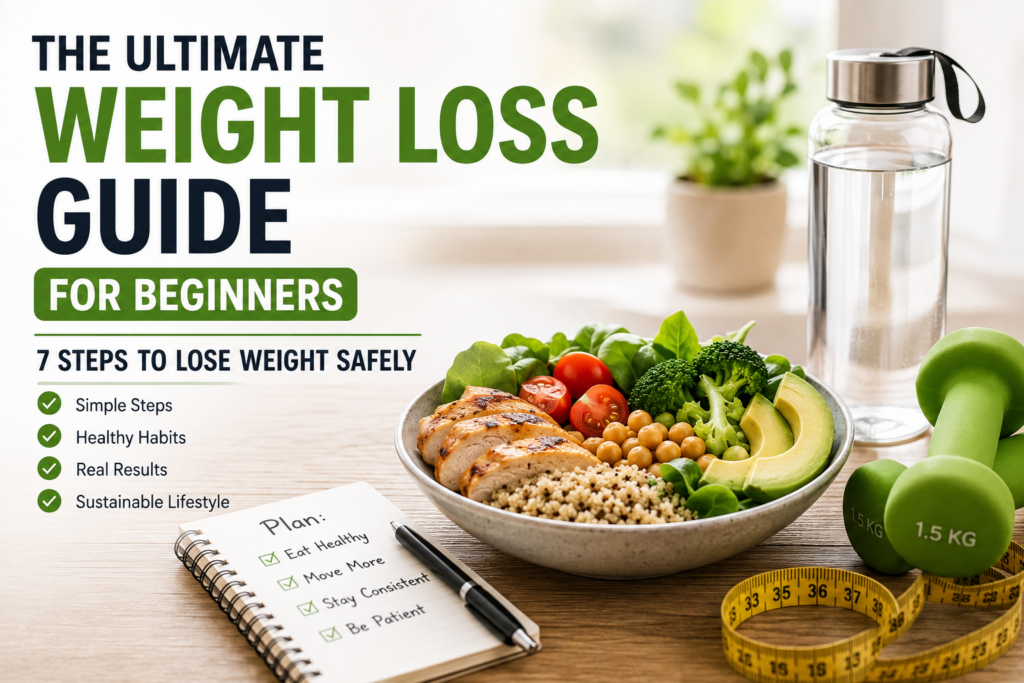
Introduction
If you’re confused by all the conflicting weight loss advice online, you’re not alone. One expert says eat less and move more. Another says carbs are the enemy. Someone else promotes detox teas or extreme fasting.
It’s no surprise that many beginners feel overwhelmed before they even begin.
The truth is simple: sustainable weight loss does not require starvation, impossible workout routines, or cutting out entire food groups. Real results come from building healthy habits you can maintain for life.
This beginner-friendly guide breaks everything down into 7 science-backed steps that actually work. Whether you’re starting your first weight loss journey or trying again after failed diets, these strategies will help you lose weight safely, improve your energy, and build long-term healthy habits.

Step 1: Understand Calories Without Starving Yourself
One of the biggest misconceptions about weight loss is believing you need to eat as little as possible. In reality, starving yourself often slows your metabolism, increases cravings, and leads to binge eating later.
Healthy fat loss happens through a calorie deficit, which means consuming slightly fewer calories than your body burns each day.
A moderate deficit of around 300–500 calories daily is usually enough for sustainable weight loss while preserving energy and muscle mass.
Why Extreme Diets Fail
Crash diets may create fast results at first, but they are difficult to maintain. Many people regain the weight because the diet was too restrictive.
Sustainable weight loss focuses on consistency, not perfection.
Action Step
Use a free online TDEE (Total Daily Energy Expenditure) calculator to estimate your maintenance calories. Then reduce that number slightly to begin losing fat safely.
Step 2: Focus on Protein and Fiber at Every Meal
Not all calories affect your body the same way. Protein and fiber are two of the most important nutrients for controlling hunger and supporting fat loss.
Why Protein Matters
Protein helps preserve muscle while losing fat and keeps you fuller for longer. It also slightly boosts calorie burning through digestion, known as the thermic effect of food.
Good protein sources include:
- Eggs
- Chicken breast
- Greek yogurt
- Tuna
- Lentils
- Tofu
- Cottage cheese
Why Fiber Helps Weight Loss
Fiber slows digestion and stabilizes blood sugar levels, helping reduce cravings and overeating.
Excellent fiber-rich foods include:
- Oats
- Vegetables
- Apples
- Beans
- Chia seeds
- Broccoli
- Berries
Action Step
At every meal, ask yourself:
- “Where is my protein?”
- “Where is my fiber?”
This simple habit alone can dramatically improve appetite control.

Step 3: Start Strength Training (You Will Not Get Bulky)
Many beginners avoid strength training because they fear becoming “too muscular.” In reality, building large amounts of muscle requires years of intense training and highly specific nutrition.
For beginners, strength training mainly helps:
- Burn more calories
- Improve body composition
- Increase metabolism
- Protect muscle during weight loss
- Improve confidence and posture
Best Beginner Exercises
You do not need a gym membership to start. Simple bodyweight exercises are highly effective:
- Squats
- Push-ups
- Lunges
- Glute bridges
- Planks
- Resistance band rows
Even two or three 20-minute sessions per week can make a noticeable difference.
Action Step
Schedule 2–3 beginner strength workouts weekly and focus on consistency instead of intensity.
Step 4: Improve Your Sleep and Manage Stress
This is one of the most overlooked parts of weight loss.
You can eat healthy and exercise regularly, but poor sleep and chronic stress can still slow your progress.
How Sleep Affects Weight Loss
Lack of sleep increases cortisol (the stress hormone) and ghrelin (the hunger hormone). This combination increases cravings for sugary, high-calorie foods while making fat loss harder.
Poor sleep also reduces energy levels, making workouts and healthy habits more difficult.
The Stress and Belly Fat Connection
Chronic stress encourages the body to store fat — especially around the abdominal area.
This is why stress management is essential for anyone trying to reduce belly fat naturally.
Simple Ways to Lower Stress
- Deep breathing
- Walking outdoors
- Meditation
- Stretching
- Listening to music
- Spending time with supportive people
Action Step
Aim for 7–9 hours of sleep nightly and spend at least 10 minutes daily doing something relaxing.
Step 5: Stop Drinking Your Calories
Many people consume hundreds of extra calories through drinks without realizing it.
Sugary beverages often provide little fullness, meaning you stay hungry despite consuming large amounts of calories.
Better Drink Choices
| High-Calorie Drink | Calories | Healthier Alternative |
|---|---|---|
| Sugary soda | 150 kcal | Sparkling water with lemon |
| Sweetened latte | 250 kcal | Black coffee |
| Fruit juice | 165 kcal | Whole fruit + water |
| Alcoholic cocktail | 200+ kcal | Soda water with lime |
Replacing one sugary drink daily can save thousands of calories each month.
Action Step
Replace one high-calorie beverage per day with water, herbal tea, or sparkling water.

Step 6: Try Intermittent Fasting (Optional)
Intermittent fasting (IF) is an eating schedule rather than a diet.
Some people find it easier to control calories by limiting their eating window, while others prefer traditional meal timing.
Popular Intermittent Fasting Methods
16:8 Method
Fast for 16 hours and eat within an 8-hour window.
14:10 Method
A beginner-friendly option with a 14-hour fast and 10-hour eating window.
5:2 Method
Eat normally for 5 days and reduce calories on 2 non-consecutive days.
Important Reminder
Intermittent fasting is optional. Weight loss still depends mainly on calorie balance and sustainable habits.
Action Step
If you want to try fasting, begin with the 14:10 method for one week and see how your body responds.
Step 7: Track Non-Scale Victories
The scale does not tell the whole story.
Body weight naturally fluctuates because of water retention, hormones, sodium intake, and digestion. This means the scale may not always reflect real progress.
Signs You Are Making Progress
- Clothes fit better
- More energy during the day
- Better sleep quality
- Improved workout performance
- Fewer cravings
- Better mood and confidence
- Increased stamina
These changes are often more important than the number on the scale.
Action Step
Every week, write down 2–3 positive changes you noticed. This helps maintain motivation during your journey.
Bonus Tips for Faster and Healthier Results
Walk More Throughout the Day
Daily walking improves calorie burning, digestion, heart health, and stress reduction. Even 20–30 minutes per day helps.
Avoid “All-or-Nothing” Thinking
One unhealthy meal does not ruin your progress. Consistency over time matters far more than perfection.
Be Patient
Healthy fat loss takes time. Sustainable changes create lasting results.
Conclusion
You do not need extreme diets or exhausting workouts to lose weight successfully.
The most effective beginner weight loss plan is one that feels realistic, balanced, and sustainable.
Focus on these core habits:
- Moderate calorie deficit
- More protein and fiber
- Strength training
- Better sleep
- Stress management
- Healthier drinks
- Consistency over perfection
Small improvements repeated daily lead to major results over time.
Start with just one step today. Then build momentum gradually.
Remember: progress is not about being perfect — it’s about becoming healthier one habit at a time.
Which step will you start with first? Share your goal in the comments.
Frequently Asked Questions (FAQ)
Q1: How long does it take to lose weight safely?
Most people notice improvements in energy and appetite within 2 weeks. Visible body changes usually appear after 4–8 weeks of consistent habits.
Q2: What is a healthy amount of weight to lose weekly?
A safe and sustainable rate is around 0.5–1 kg (1–2 pounds) per week.
Q3: Do I need to avoid carbohydrates completely?
No. Healthy carbohydrates like oats, brown rice, fruits, and sweet potatoes provide important energy and nutrients.
Q4: Can I lose weight without exercise?
Yes, weight loss mainly depends on calorie balance. However, exercise improves health, metabolism, strength, and long-term results.
Q5: What is the biggest mistake beginners make?
Trying to change everything at once. Small, consistent habits are far more effective than extreme short-term efforts.
Medical Disclaimer: This article is for informational purposes only and does not constitute medical advice. Consult a qualified healthcare professional before starting any new diet or exercise program, especially if you have an existing medical condition.