
Introduction
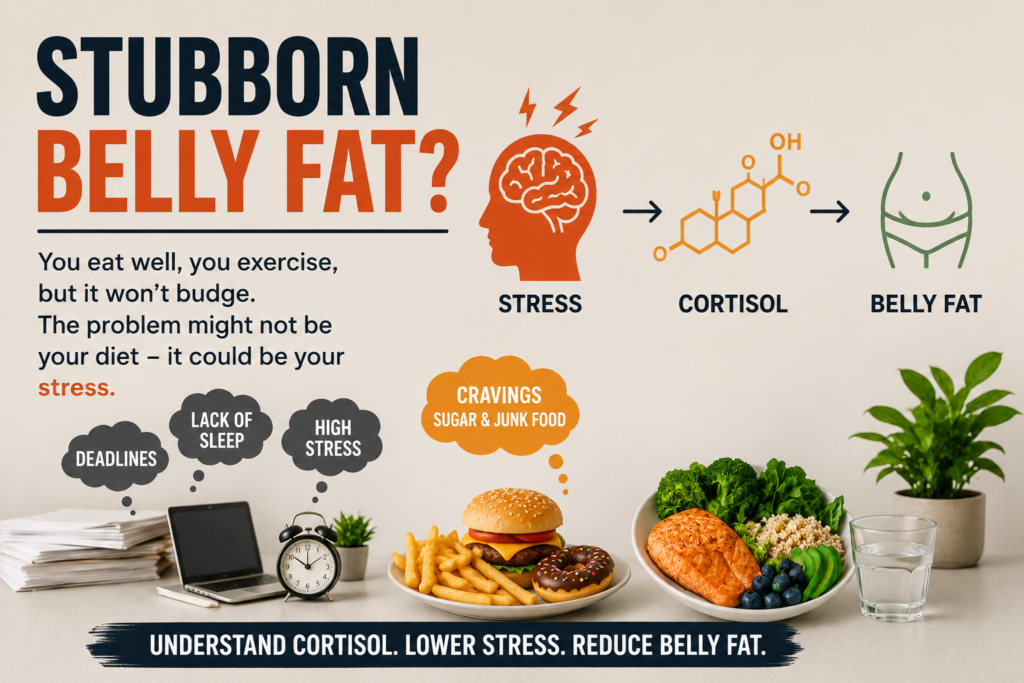
You eat well, you exercise, but that stubborn belly fat won’t budge. The problem might not be your diet — it could be your stress.
Many people focus only on calories and workouts when trying to lose weight. However, chronic stress can quietly sabotage your progress by affecting hormones that control fat storage, appetite, sleep, and metabolism.
Cortisol is the body’s primary stress hormone. In small amounts, it helps you survive and function properly. But when cortisol stays elevated for long periods, it can contribute to weight gain — especially around the belly area.
In this article, you’ll learn the science behind the cortisol belly fat connection and discover 7 natural, practical ways to lower cortisol naturally and support healthier fat loss.
For a deeper dive into how daily habits impact fat loss, read our guide on common weight loss mistakes that slow your metabolism

What Is Cortisol? Your Body’s Alarm System
Cortisol is a hormone produced by the adrenal glands. It plays a major role in your body’s stress response and acts like an internal alarm system.
When you face stress — whether physical, emotional, or mental — cortisol helps your body respond quickly by increasing energy availability. This is helpful in short-term situations, such as exercise, danger, or illness.
Cortisol also supports several essential functions, including:
- Regulating blood sugar levels
- Controlling inflammation
- Supporting metabolism
- Maintaining the sleep-wake cycle
- Helping the body manage stress
The important thing to understand is that cortisol itself is not bad. Your body needs it to function properly.
The real issue happens when stress becomes chronic. Constant pressure from work, lack of sleep, excessive exercise, emotional stress, or poor recovery can keep cortisol levels elevated for weeks or months. Over time, this affects fat storage, hunger signals, and overall health.
How High Cortisol Leads to Belly Fat Storage (The Science)
The connection between cortisol and belly fat is backed by growing scientific evidence.
When cortisol remains high for long periods, the body releases more insulin to help stabilize blood sugar. Elevated insulin levels encourage fat storage, especially around the abdominal area.
This process is particularly linked to visceral fat — the deeper type of fat stored around internal organs. Unlike subcutaneous fat, which sits just under the skin, visceral fat is considered more dangerous because it’s associated with higher risks of heart disease, type 2 diabetes, and metabolic problems.
High Cortisol vs. Normal Cortisol Symptoms
| Normal Cortisol Balance | Chronically High Cortisol |
|---|---|
| Stable energy levels | Energy crashes and fatigue |
| Healthy appetite control | Constant cravings |
| Better sleep quality | Trouble falling asleep |
| Easier weight management | Belly fat accumulation |
| Balanced mood | Anxiety and irritability |
High cortisol also affects appetite regulation. Many people notice stronger cravings for sugary or fatty comfort foods during stressful periods. This isn’t just a lack of willpower — it’s a biological response.
Your body interprets chronic stress as a potential threat and encourages you to seek quick energy sources. Unfortunately, these foods are often calorie-dense and contribute to further fat gain.


5 Signs Your Cortisol Might Be Too High
1. Constant Cravings for Sugar or Salty Snacks
Frequent cravings for processed foods may be linked to elevated stress hormones. Cortisol increases the desire for fast energy foods, especially during emotional stress.
2. Feeling Tired but “Wired” at Night
You feel exhausted all day, yet your brain becomes active at bedtime. High cortisol can disrupt the body’s natural sleep rhythm and interfere with melatonin production.
3. Weight Gain Specifically Around the Midsection
One of the most common cortisol belly fat symptoms is increased abdominal fat despite healthy eating or regular exercise.
4. Digestive Issues
Stress directly affects digestion. Elevated cortisol levels may contribute to bloating, stomach discomfort, or IBS-like symptoms in some individuals.
5. Anxiety, Irritability, or Brain Fog
Chronic stress doesn’t just affect the body — it impacts mental clarity and mood as well. Difficulty concentrating and increased irritability are common signs.
The Stress-Eating Connection (Why You Crave Junk Food)
Stress changes the way your brain and hormones regulate hunger.
Cortisol interacts with two major appetite hormones:
- Ghrelin: the hormone that increases hunger
- Leptin: the hormone that signals fullness
Under chronic stress, ghrelin levels may rise while leptin signaling becomes less effective. This combination can lead to stronger hunger signals and reduced feelings of satisfaction after eating.
As a result, your body actively pushes you toward high-calorie foods rich in sugar and fat. From an evolutionary perspective, this was once a survival mechanism designed to store energy during stressful situations.
Today, however, chronic stress combined with easy access to processed foods can make weight management much harder.
This is one major reason why understanding how stress causes weight gain is so important for long-term fat loss success.
If you struggle with cravings at night, our article on emotional eating explains why stress drives food choices.

7 Natural Ways to Lower Cortisol and Reduce Belly Fat
1. Prioritize 7–9 Hours of Sleep
Poor sleep is one of the fastest ways to increase cortisol levels. Even a few nights of insufficient sleep can disrupt hormones related to hunger and fat storage.
Action Step: Create a consistent bedtime routine and avoid screens 30–60 minutes before sleep.
2. Reduce Caffeine After Noon
Caffeine stimulates cortisol release, especially when consumed later in the day. For some people, afternoon coffee can worsen anxiety and disrupt sleep quality.
Action Step: Switch to herbal tea or decaf options after lunchtime.
3. Practice Deep Breathing or Meditation
Research shows that mindfulness practices can help lower cortisol naturally by calming the nervous system.
Just 5–10 minutes of slow breathing can reduce stress responses and improve mental clarity.
Action Step: Try box breathing: inhale for 4 seconds, hold for 4 seconds, exhale for 4 seconds, hold again for 4 seconds.
4. Walk in Nature
Not all exercise needs to be intense. Gentle movement like walking can reduce stress hormone levels without overloading the body.
Spending time outdoors also improves mood and mental recovery.
Action Step: Take a 20–30 minute walk in a park or quiet outdoor area several times per week.
5. Eat Balanced Meals
Skipping meals or drastically cutting carbohydrates can raise cortisol levels because the body perceives low blood sugar as a stress signal.
Balanced meals support energy stability and healthier metabolism.
Action Step: Include protein, healthy fats, fiber, and complex carbohydrates in each meal.
Balanced meals are key. Discover specific foods that help in our guide on 10 foods that boost metabolism
6. Laugh and Socialize
Positive social interactions can significantly reduce stress and improve emotional resilience.
Laughter and connection help shift the nervous system into a more relaxed state.
Action Step: Spend time with supportive friends or watch something genuinely funny each week.
7. Avoid Over-Exercising
Exercise is healthy, but excessive high-intensity training without recovery can elevate cortisol for extended periods.
If you’re constantly exhausted, sore, or struggling to recover, your body may need more rest.
Action Step: Balance intense workouts with recovery days, stretching, walking, or yoga.

6
Conclusion
Cortisol plays an essential role in the body, but chronic stress can make fat loss much more difficult.
When cortisol remains elevated, it can increase cravings, disrupt sleep, affect metabolism, and encourage belly fat storage. Understanding the connection between stress hormone and metabolism can help you approach weight loss in a smarter, healthier way.
The good news is that you don’t need extreme diets or endless cardio sessions to improve your results. Small daily habits — better sleep, balanced nutrition, stress management, and proper recovery — can make a significant difference over time.
Remember: lower cortisol = easier fat loss.
Start simple. Pick one or two strategies from this list and apply them consistently this week.
Which stress-reducing strategy will you try first? Share in the comments.
Frequently Asked Questions (FAQ)
Q1: Can cortisol alone cause belly fat?
No — but it strongly encourages belly fat storage through insulin resistance, increased appetite, and changes in fat distribution.
Q2: How long does it take to lower cortisol naturally?
Noticeable improvements often take around 2–4 weeks of consistent sleep, stress management, balanced nutrition, and recovery habits.
Q3: What foods reduce cortisol naturally?
Whole foods rich in nutrients may help support stress management, including:
- Dark leafy greens
- Berries
- Fatty fish rich in omega-3s
- Dark chocolate (70%+)
- Green tea
Medical Disclaimer: This article is for informational purposes only and does not constitute medical advice. Consult a healthcare professional before making significant changes to your diet or lifestyle.