
Reading Time: 9–10 minutes Who this guide is for: Anyone who wants a realistic, sustainable healthy meal plan for weight loss without extreme restriction, fad diets, or constant hunger.
Key Takeaways:
- A structured healthy meal plan for weight loss removes daily food decisions, which makes it easier to stay in a calorie deficit.
- Protein, fiber, and healthy fats are the three pillars of an effective weight loss meal plan.
- The 7-day plan below gives you a flexible template, not a rigid rulebook.
- Small, repeatable habits beat short-term restrictive diets for long-term results.
Introduction
Losing weight is rarely about willpower alone. Most people don’t fail because they lack motivation — they fail because they haven’t removed decision fatigue from their day.
A healthy meal plan for weight loss solves this problem directly. When your meals are already decided, you’re far less likely to grab whatever is fastest, cheapest, or most tempting in the moment.
Planning ahead also makes it easier to maintain a steady calorie deficit, since you’re not guessing portion sizes or nutrition content on the fly. Over time, this consistency — not perfection — is what drives real, lasting results.
This guide walks you through a full 7-day weight loss meal plan, the nutritional principles behind it, and practical strategies to make it stick.
Why a Meal Plan Helps You Lose Weight
A good healthy meal plan for weight loss works because it addresses several common obstacles at once.
- Portion control: Pre-planned meals naturally limit oversized servings, which are one of the biggest hidden sources of extra calories.
- Calorie management: Knowing roughly what you’re eating each day makes it far easier to stay within a sustainable calorie deficit.
- Better nutrition: Planning ahead means you can prioritize whole foods instead of relying on whatever is convenient.
- Reduced cravings: Balanced meals with protein and fiber keep blood sugar steadier, which reduces the intensity of cravings later in the day.
- Easier grocery shopping: A weekly plan turns grocery trips into a quick, targeted task instead of a source of stress or impulse buying.
Together, these factors make weight loss feel less like a constant battle and more like a routine you can actually maintain.
How to Build a Healthy Weight Loss Meal Plan
Before jumping into a 7-day schedule, it helps to understand the building blocks of any effective weight loss meal plan. According to nutrition guidance from Harvard T.H. Chan School of Public Health, balanced plates built around protein, fiber-rich carbohydrates, and healthy fats support both satiety and metabolic health.
1. Protein
Protein helps preserve muscle mass during weight loss and keeps you fuller for longer, which naturally reduces overeating. Aim to include a source of lean protein at every meal — eggs, chicken, fish, tofu, legumes, or Greek yogurt are all excellent options.
2. Fiber
Fiber slows digestion, stabilizes blood sugar, and supports gut health. Vegetables, fruits, whole grains, and legumes are the easiest ways to increase daily fiber intake.
3. Healthy Fats
Fats like olive oil, avocado, nuts, and seeds support hormone balance and help you feel satisfied after meals. The goal isn’t to eliminate fat — it’s to choose the right sources in moderate amounts.
4. Complex Carbohydrates
Whole grains such as oats, brown rice, and quinoa provide steady energy without the blood sugar spikes associated with refined carbohydrates.
5. Hydration
Water plays a quiet but important role in appetite regulation. The USDA recommends staying consistently hydrated throughout the day, as thirst is often mistaken for hunger.
7-Day Healthy Meal Plan for Weight Loss
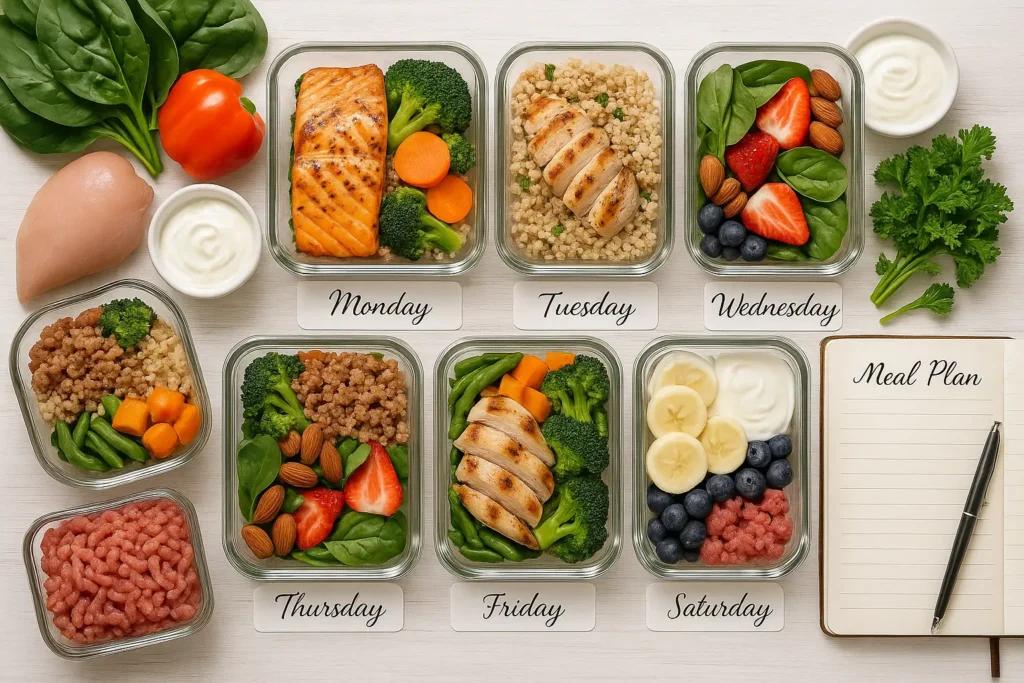
Here is a complete 7-day weight loss meal plan you can follow as-is or adapt based on your preferences and calorie needs.
| Day | Breakfast | Morning Snack | Lunch | Afternoon Snack | Dinner | Est. Daily Calories |
|---|---|---|---|---|---|---|
| 1 | Greek yogurt with berries and oats | Small handful of almonds | Grilled chicken salad with olive oil dressing | Apple slices with peanut butter | Baked salmon with steamed vegetables | ~1,400–1,500 |
| 2 | Veggie omelet with whole-grain toast | Carrot sticks with hummus | Quinoa bowl with chickpeas and vegetables | Greek yogurt | Turkey stir-fry with brown rice | ~1,400–1,500 |
| 3 | Oatmeal with banana and cinnamon | Boiled egg | Grilled fish tacos with cabbage slaw | Cottage cheese with cucumber | Lentil soup with side salad | ~1,350–1,450 |
| 4 | Smoothie with spinach, protein powder, and berries | Handful of walnuts | Chicken and vegetable wrap (whole wheat) | Orange | Baked tofu with roasted vegetables | ~1,400–1,500 |
| 5 | Whole-grain toast with avocado and egg | Rice cakes with almond butter | Grilled shrimp salad | Greek yogurt with honey | Turkey meatballs with zucchini noodles | ~1,400–1,500 |
| 6 | Cottage cheese with fruit | Mixed nuts | Brown rice bowl with grilled chicken and veggies | Apple | Grilled fish with steamed broccoli | ~1,450–1,550 |
| 7 | Protein pancakes with berries | Boiled egg | Mediterranean chickpea salad | Cucumber with hummus | Baked chicken breast with sweet potato | ~1,450–1,550 |
Note: These calorie estimates are general guidelines. Individual needs vary based on age, activity level, height, and weight, so adjust portions accordingly.
Healthy Foods to Include Every Week
A sustainable healthy meal plan for weight loss should rotate through these food groups:
- Lean protein: chicken breast, turkey, fish, eggs, tofu, legumes.
- Whole grains: oats, quinoa, brown rice, whole-wheat bread.
- Fruits: berries, apples, oranges, bananas.
- Vegetables: leafy greens, broccoli, peppers, zucchini.
- Healthy fats: olive oil, avocado, nuts, seeds.
- Dairy or alternatives: Greek yogurt, cottage cheese, unsweetened almond milk.
Foods to Limit
Certain foods can quietly undermine your progress, even when the rest of your healthy eating plan is on track.
- Sugary drinks: Sodas and sweetened beverages add significant calories without contributing to fullness.
- Processed foods: Packaged snacks are often high in added sugar, sodium, and unhealthy fats.
- Refined carbohydrates: White bread and pastries cause quick blood sugar spikes followed by crashes and hunger.
- High-calorie snacks: Chips, fried foods, and sugary desserts are easy to overeat because they’re calorie-dense but not very filling.
Limiting — rather than completely eliminating — these foods tends to be more sustainable long-term.
Meal Prep Tips for Busy People
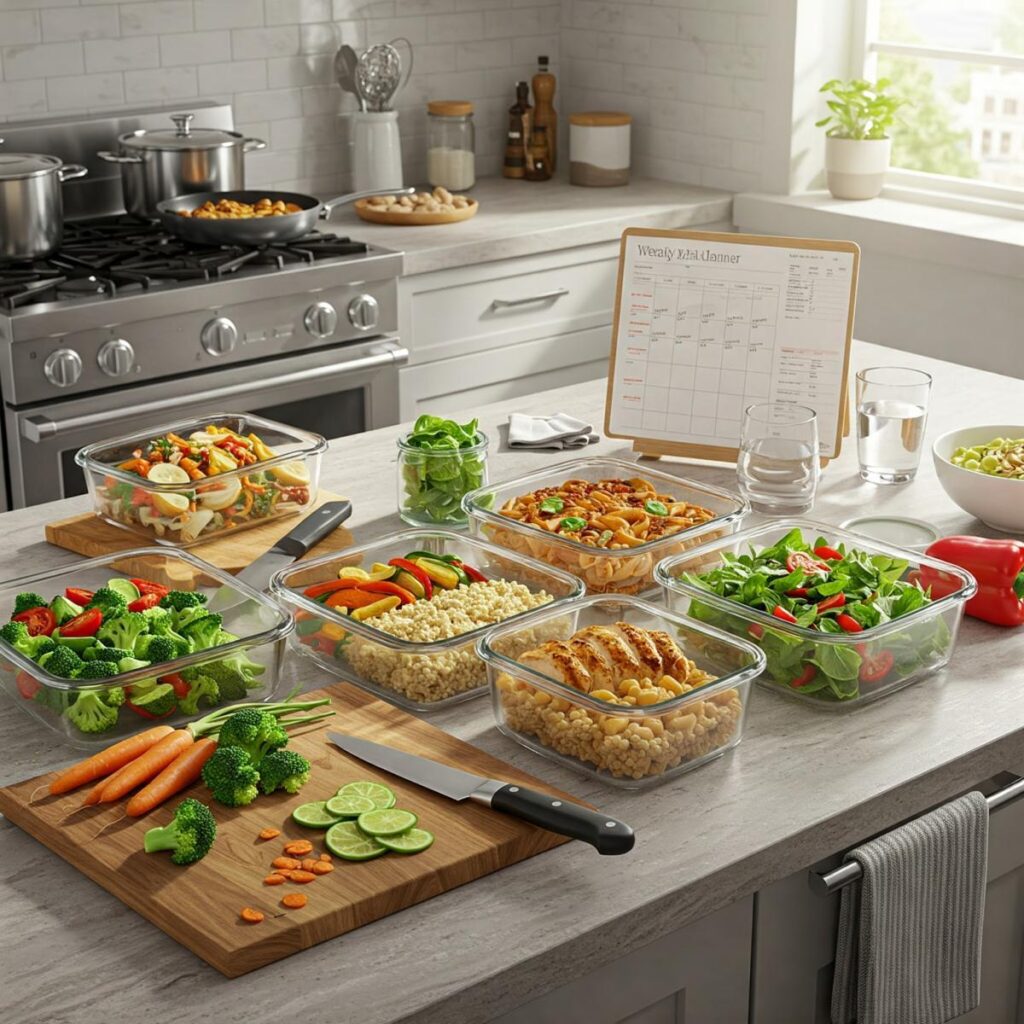
Meal prep is what turns a weekly meal plan from a good idea into a realistic habit.
- Set aside one to two hours each week to batch-cook proteins and grains.
- Wash and chop vegetables in advance so they’re ready to grab.
- Store meals in clear, portioned containers to avoid overeating.
- Keep a small rotation of 2–3 breakfast options to simplify mornings.
- Freeze extra portions of soups, stews, or cooked grains for busy days.
Common Meal Planning Mistakes
Even with good intentions, these mistakes can slow down progress:
- Skipping meals: This often leads to overeating later in the day.
- Not eating enough protein: Low protein intake makes it harder to feel satisfied and preserve muscle.
- Oversized portions: Even healthy foods can stall weight loss if portions are too large.
- Buying unhealthy snacks “just in case”: Having tempting foods at home increases the odds of eating them impulsively.
- Lack of variety: Eating the same meals repeatedly can lead to boredom and derail your plan.
Expert Tips
According to guidance from the Academy of Nutrition and Dietetics, gradual, moderate calorie reduction paired with regular physical activity tends to produce more sustainable results than extreme restriction.
- Focus on progress over perfection — one imbalanced meal won’t undo your progress.
- Eat slowly and pay attention to hunger and fullness cues.
- Prioritize sleep, since poor sleep is linked to increased appetite and cravings.
- Combine your calorie deficit meal plan with regular movement rather than diet alone.
- Track progress with how your clothes fit and your energy levels, not just the scale.
Frequently Asked Questions
1. How many calories should I eat to lose weight? Most adults lose weight gradually with a moderate calorie deficit, but exact needs depend on age, sex, activity level, and starting weight.
2. Is this 7-day plan suitable for everyone? It’s a general template. People with specific medical conditions should adjust portions and ingredients with guidance from a healthcare provider or registered dietitian.
3. Can I substitute meals within the plan? Yes. As long as substitutions keep a similar balance of protein, fiber, and healthy fats, you can rotate meals freely.
4. Do I need to count calories strictly? Not necessarily. Following balanced, portion-controlled meals often achieves similar results without obsessive tracking.
5. What’s the best snack for weight loss? Snacks that combine protein and fiber — like Greek yogurt with fruit or vegetables with hummus — tend to be the most satisfying.
6. How much water should I drink daily? General hydration guidelines suggest drinking water consistently throughout the day, adjusting for activity level and climate.
7. Is meal prepping necessary for weight loss? It’s not mandatory, but it significantly increases consistency, which is one of the strongest predictors of long-term success.
8. How long does it take to see results? Visible changes often take a few weeks of consistent effort, while sustainable weight loss typically continues gradually over months.
Final Thoughts
A healthy meal plan for weight loss works best when it’s treated as a long-term habit rather than a short-term fix. Instead of chasing rapid, restrictive results, focus on consistency, balance, and foods you can realistically eat week after week.
Small, sustainable changes — not extreme diets — are what actually last.